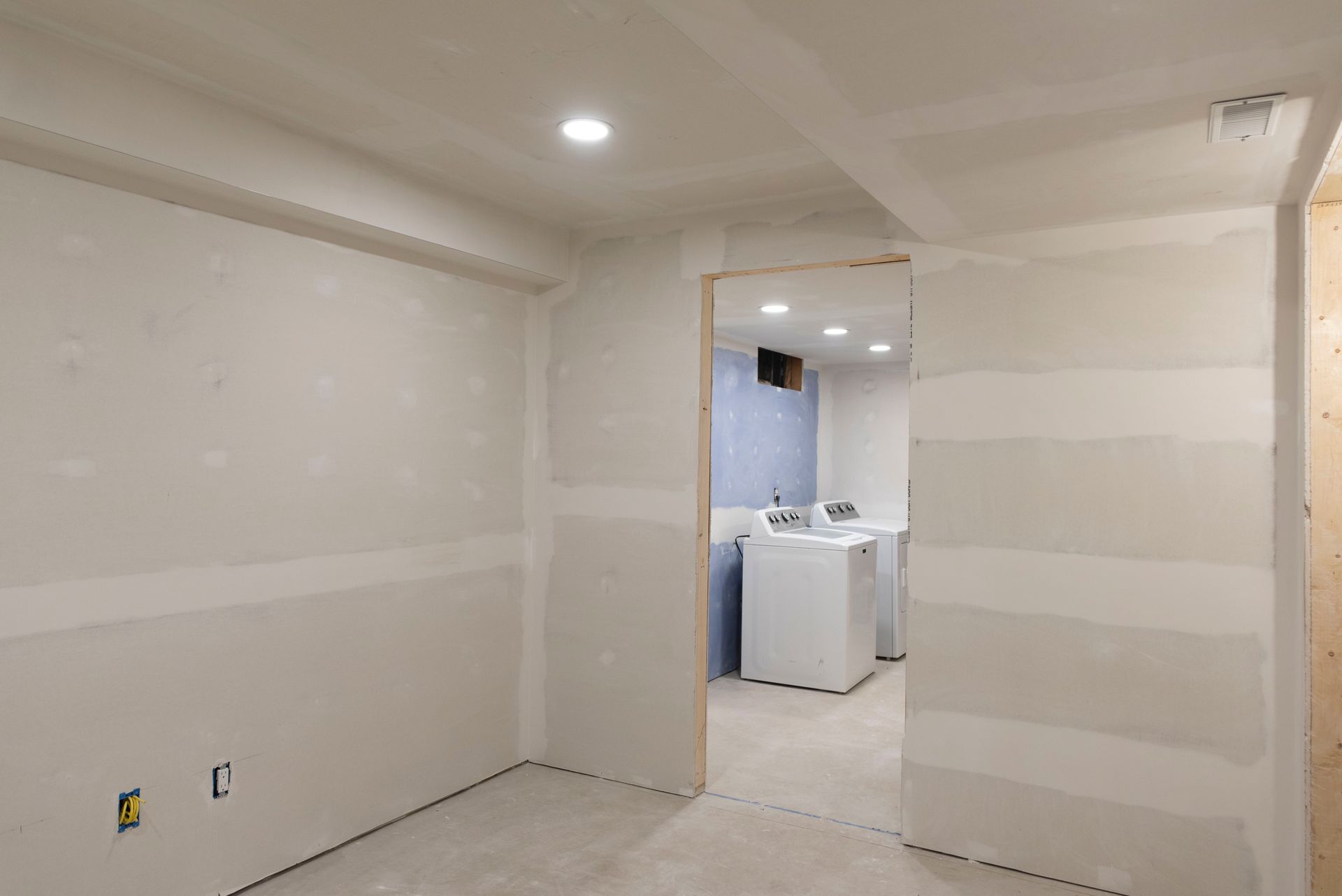
Walls Restored to Smooth Finished Surfaces
Drywall Repair and Installation in London for fixing holes, cracks, and water-damaged sections before repainting
Holes punched through drywall by doorknobs, cracks spreading from settling foundations, and sagging ceiling sections stained by roof leaks all interrupt the clean plane a wall should present. Sturgill's Handyman Services repairs and installs drywall in London, preparing surfaces so paint adheres evenly and imperfections disappear. When you run your hand across a repaired section after finishing, the transition between old and new material shouldn't be detectable.
Repair work involves cutting away damaged material to solid edges, securing backing for new drywall pieces, taping and mudding seams with multiple coats, and sanding until the surface feels uniform under your palm. Installation for remodeling projects requires measuring and cutting sheets to fit room dimensions, fastening panels to studs at code-specified intervals, and finishing all joints and screw indentations.
Request a drywall repair estimate to address visible damage and prepare walls for painting or refinishing work.
How Drywall Repair Addresses Visible Damage
Fixing drywall correctly means applying joint compound in thin layers rather than thick single coats, allowing each layer to dry completely before adding the next, and feathering edges so repaired areas blend into surrounding wall texture. Rushing this process leaves visible ridges and uneven surfaces that show through paint.
You'll notice repaired areas become invisible once primer and paint are applied, ceiling sections no longer sag or show stains, and walls return to the smooth, uninterrupted surface they had before damage occurred. Light reflecting off the wall won't highlight depressions or raised spots where repairs were made.
Water damage requires identifying and fixing the leak source before drywall replacement, since installing new material over active moisture problems leads to repeated failure. Texture matching also matters—if existing walls have orange peel or knockdown texture, the repaired section needs the same pattern applied before painting to avoid obvious patches.
Answers to Frequent Drywall Questions
Property owners often need clarity on repair processes and material choices before scheduling drywall work.
What causes drywall cracks to reappear after repair?
Foundation settling, lumber shrinkage in newer homes, and temperature-driven expansion create ongoing movement that reopens cracks if repairs don't address the underlying cause or use flexible joint compound at stress points.
How is water-damaged drywall identified and addressed?
Water-stained drywall feels soft when pressed, shows discoloration or bubbling, and often conceals mold growth behind the surface, requiring full removal of affected sections and moisture testing before replacement begins.
What preparation happens before new drywall gets painted?
After installation, joint compound is applied to all seams and fastener holes, each coat is sanded smooth once dry, and primer is rolled onto the entire surface to seal the material and create uniform paint absorption.
When does drywall damage require professional repair?
Holes larger than a fist, cracks wider than a quarter-inch, sagging ceiling sections, and areas with multiple layers of failed patch attempts all benefit from complete removal and proper installation rather than additional surface patching.
How does Kentucky humidity affect drywall performance?
Homes in London experience seasonal humidity swings that cause drywall and framing lumber to expand and contract, making properly taped joints and flexible sealants important for preventing cracks at corners and ceiling-to-wall transitions.
Sturgill's Handyman Services completes drywall repair and installation projects throughout London with careful surface preparation and finishing. Schedule an evaluation to determine the extent of repair work needed and receive a detailed project estimate.